
Interpretive signs in the
Hundred Acre Wood
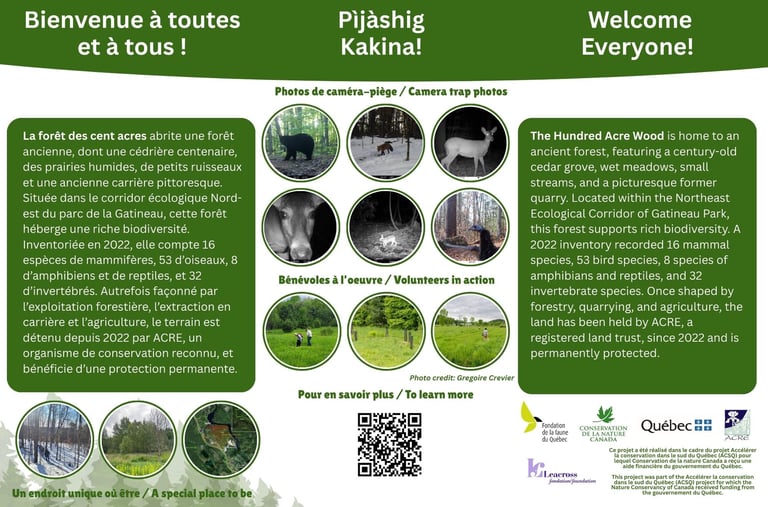
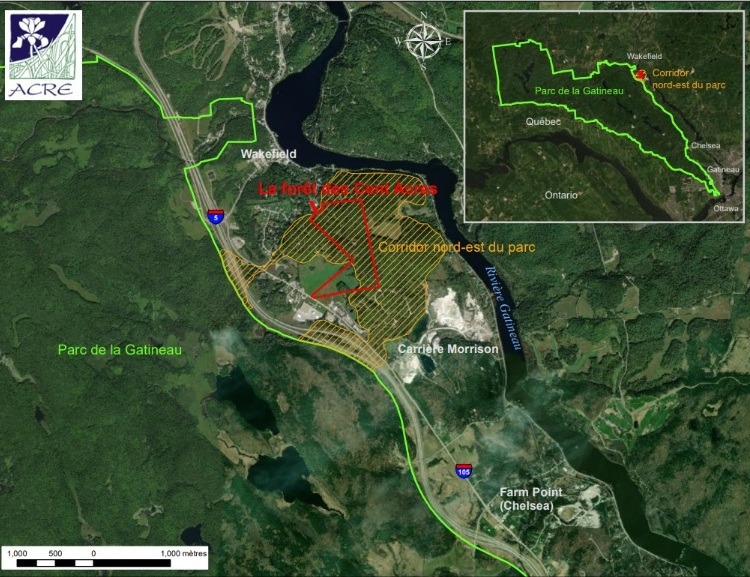
This enchanting place with the total area of 40,5 ha is home to an ancient forest, featuring a century-old cedar grove, wet meadows, small streams, and a picturesque former quarry, which was used to extract diopside. Located within the Northeast Ecological Corridor of Gatineau Park, the Hundred Acre Forest supports rich biodiversity. A 2022 inventory recorded 16 mammal species, 53 bird species, 8 species of amphibians and reptiles, and 32 invertebrate species. Once shaped by forestry, mining, and agriculture, the land has been owned by ACRE, a registered land trust, since 2022 and is now a community-protected area. A stewardship committee made up of engaged and knowledgeable local residents plays an active role in managing the forest alongside ACRE in accordance with the forest management plan.
Learn more about the forest and its species through its iNaturalist page. Record your own observations while visiting the forest using iNaturalist. Citizen science is very important for biodiversity protection!
Welcome to the Hundred Acre Wood!
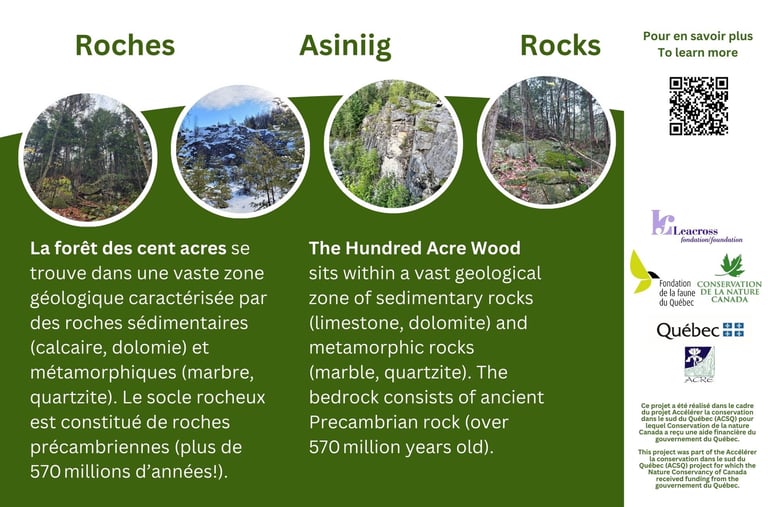
Rocks
The Hundred Acre Wood (HAW) is part of the Grenville geological province. Formed more than one billion years ago, the Grenville Province is characterized by ancient crystalline bedrock created through intense mountain-building events, volcanic activity, metamorphism, and tectonic collisions during the Precambrian era. The underlying Canadian Shield is composed primarily of granite and other igneous and metamorphic rocks. These ancient Precambrian rocks form the foundation upon which younger geological deposits and surficial materials were later laid down over time.
The HAW is located at an elevation ranging from 150 to 200 m above sea level, and its terrain is characterized by numerous hills. The varied topography creates a diversity of microhabitats, supporting a wide range of forest communities. The combination of ancient bedrock, rolling terrain, and varied soils contributes significantly to the ecological diversity and scenic character of the property.
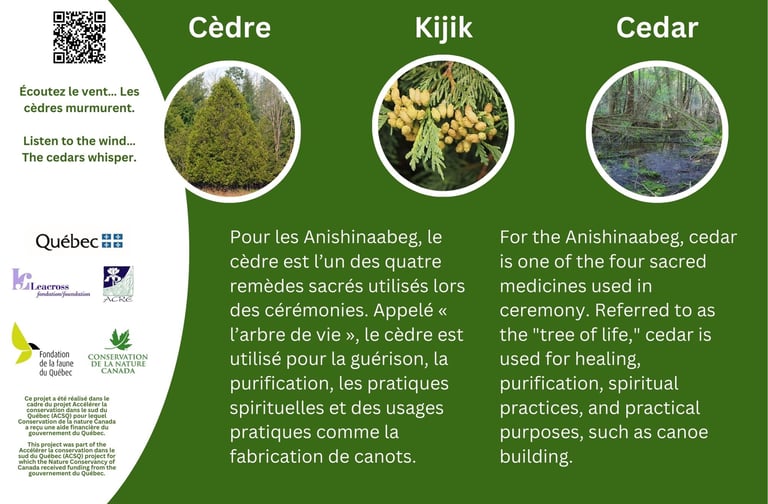
Cedar
The Hundred Acre Wood (HAW) has notable old-growth stands, including exceptional examples of eastern white cedar (Thuja occidentalis). This evergreen is typically found on wet sites, where it has an advantage, and is a haven for nesting songbirds.
For the Anishinaabeg, kijik (cedar) is one of the four sacred medicines used in ceremony. Referred to as the "tree of life," cedar is used for healing, purification, spiritual practices, and practical purposes, such as canoe building and fire starting.
Cedar is considered to be the longest-lived tree of Quebec, and there is a tree on an island on Lake Duparquet, near Rouyn-Noranda, that is almost 1000 years old.
In many regions, white-tailed deer rely heavily on white cedar during the winter months. This can lead to overbrowsing, which severely limits regeneration of the species in some forests.
Birds
Stanislas Wroza, XC1021556. Accessible at www.xeno-canto.org/1021556. Creative Commons Attribution-NonCommercial-ShareAlike 4.0.
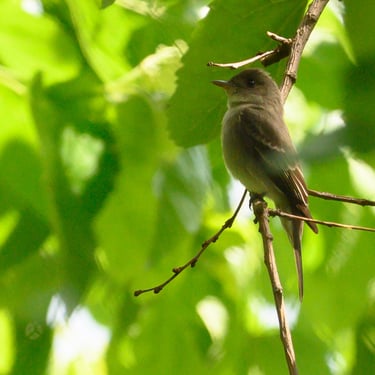
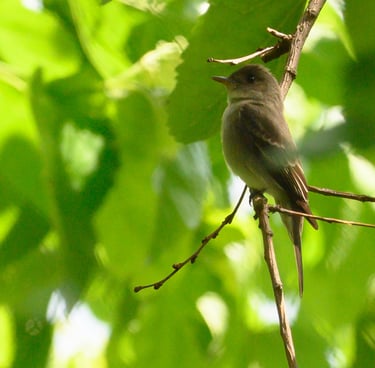
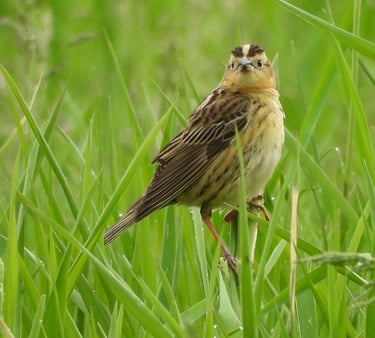
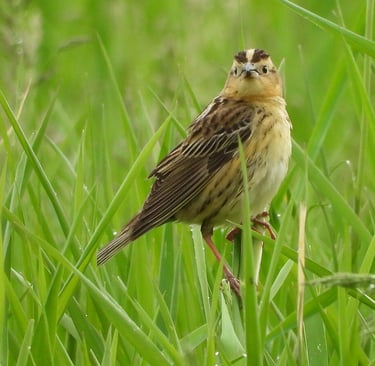
Stanislas Wroza, XC1014912. Accessible at www.xeno-canto.org/1014912. Creative Commons Attribution-NonCommercial-ShareAlike 4.0.
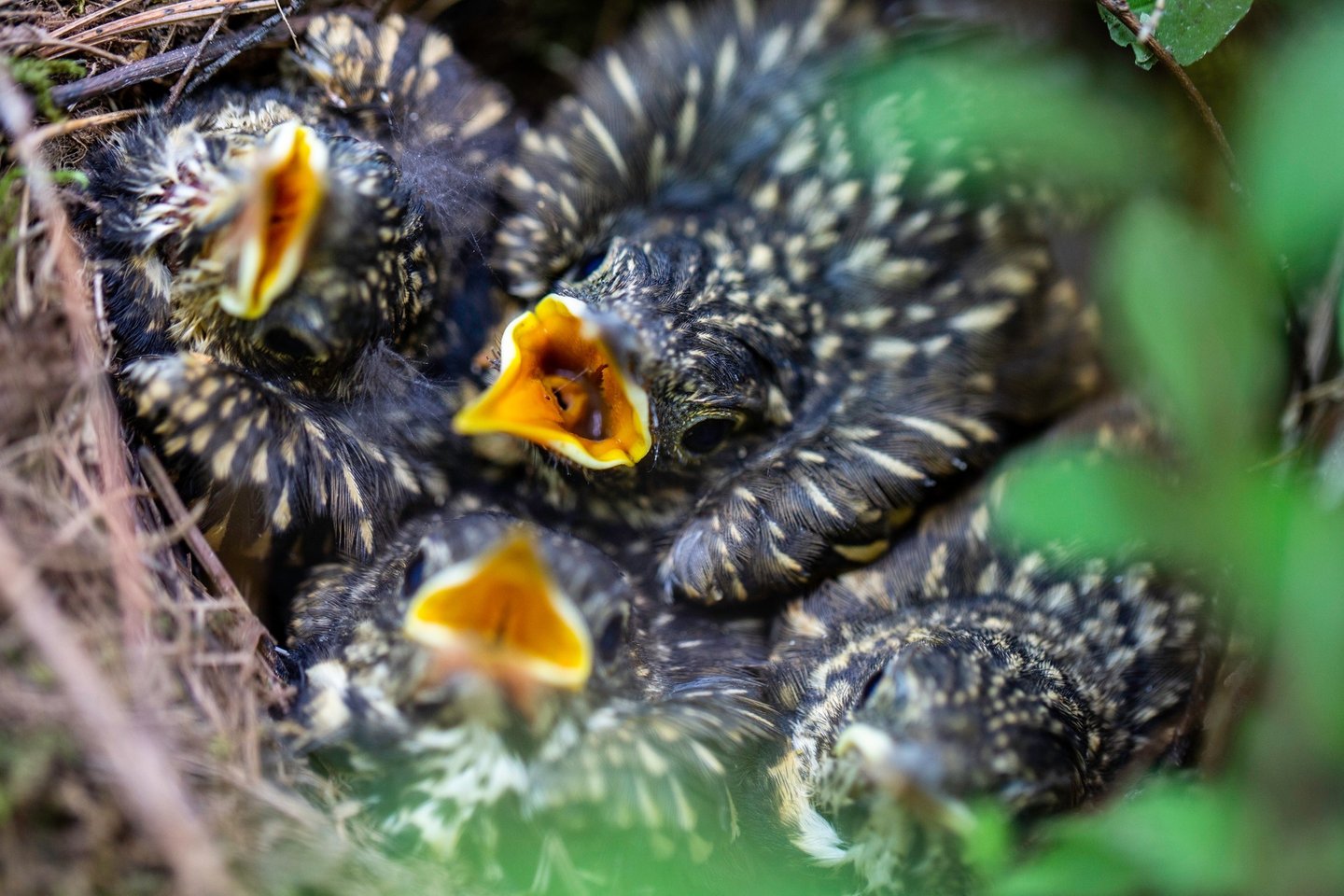
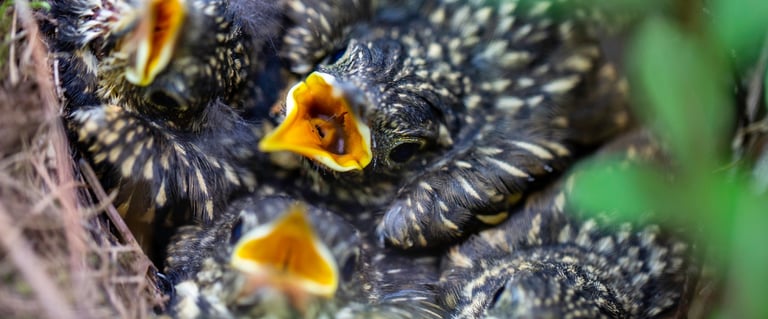
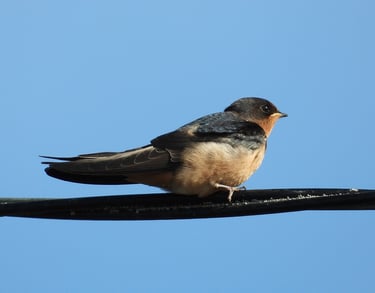
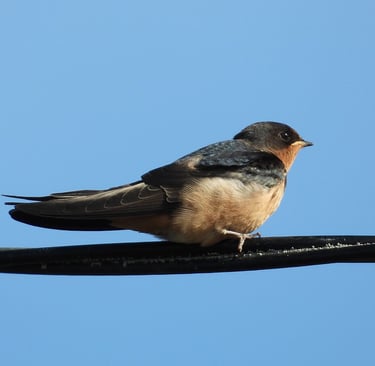
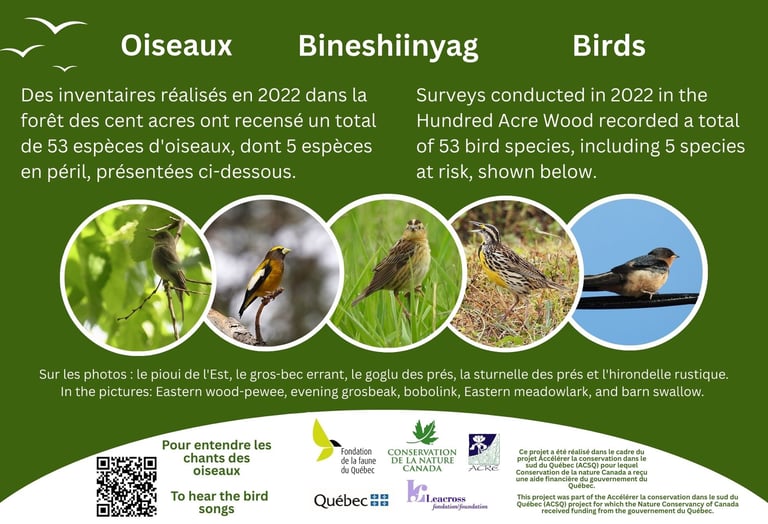
Surveys conducted in 2022 in the Hundred Acre Wood recorded a total of 53 bird species, including 5 species at risk.
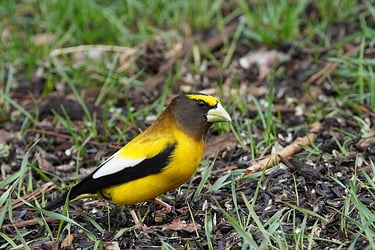
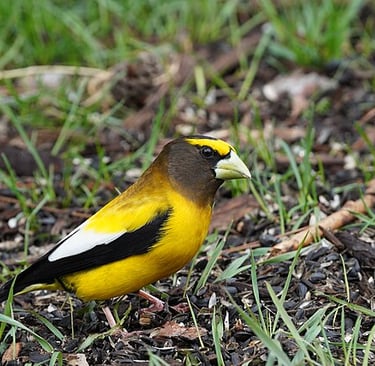
Evening grosbeak (Hesperiphona vespertina), call
Ron Overholtz, XC555496. Accessible at www.xeno-canto.org/555496. Creative Commons Attribution-NonCommercial-ShareAlike 4.0.
Eastern wood pewee (Contopus virens), alarm call, call
Stanislas Wroza, XC1014934. Accessible at www.xeno-canto.org/1014934. Creative Commons Attribution-NonCommercial-ShareAlike 4.0.
Bobolink (Dolichonyx oryzivorus), song
Stanislas Wroza, XC1021265. Accessible at www.xeno-canto.org/1021265. Creative Commons Attribution-NonCommercial-ShareAlike 4.0.
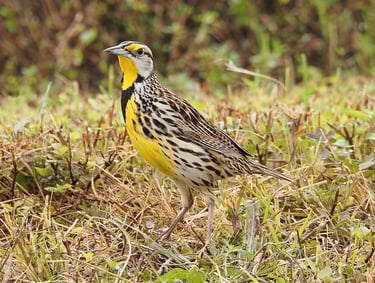
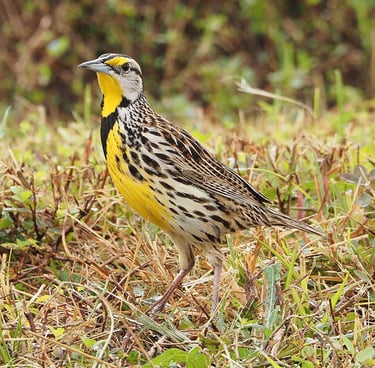
Eastern meadowlark (Sturnella magna), song
Barn swallow (Hirundo rustica), flight call
Photo credit: Michel Leger
Insects
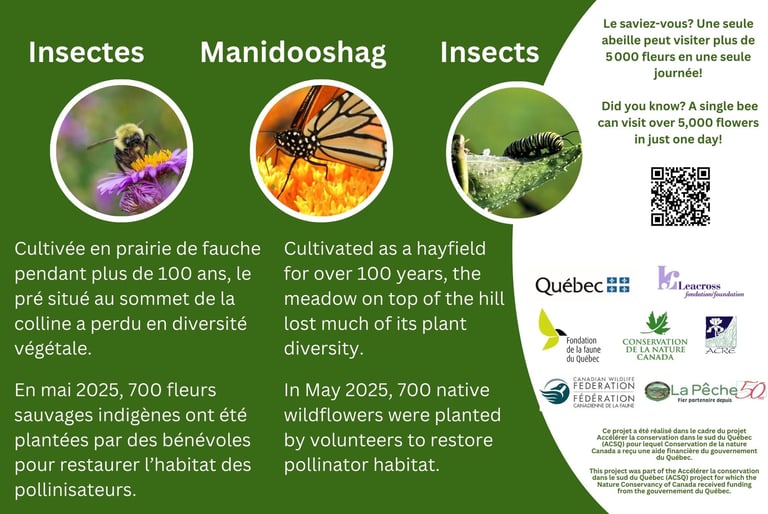
Pollinators face global threats from climate change, habitat loss, pollution, and pesticides.
What percentage of flowering plants depend on animal pollinators?
About 75–80% of flowering plant species rely on animal pollinators to some extent.
How do different pollinators specialize in different plants?
Plants and pollinators often co-evolve. For example, bees prefer bright, UV-patterned flowers, butterflies prefer flat landing platforms, and moths often pollinate night-blooming, scented flowers.
How can pollinators be protected?
Protect them by preserving and restoring natural habitats, planting native wildflowers, and reducing pesticide use and light pollution.
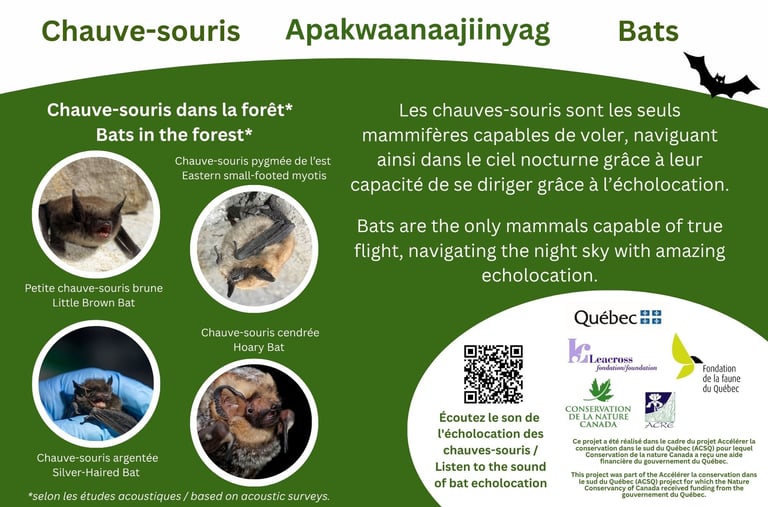
Bats
Bats use high-frequency sounds, known as ultrasonic calls, to navigate and hunt insects in the dark through a process called echolocation. Most bat calls occur at frequencies between approximately 20 and 120 kilohertz (kHz), which is well above the range of human hearing. Humans can generally hear sounds only up to about 20 kHz. Different bat species use different call frequencies depending on their hunting style and habitat.
Bat detectors can convert these ultrasonic sounds into audible frequencies, allowing researchers and nature enthusiasts to identify species and monitor bat activity. Because each species produces distinctive call patterns and frequencies, acoustic monitoring has become an important tool for bat conservation and ecological research.
Silver-haired bat (Lasionycteris noctivagans), echolocation*
François Fabianek, XC889809. Accessible at www.xeno-canto.org/889809. Creative Commons Attribution-NonCommercial-ShareAlike 4.0.
Northern myotis (Myotis septentrionalis), echolocation*
François Fabianek, XC890408. Accessible at www.xeno-canto.org/890408. Creative Commons Attribution-NonCommercial-ShareAlike 4.0.
Other local bats
Big brown bat (Eptesicus fuscus), echolocation*
François Fabianek, XC921255. Accessible at www.xeno-canto.org/921255. Creative Commons Attribution-NonCommercial-ShareAlike 4.0.
Tricolored bat (Perimyotis subflavus), echolocation*
François Fabianek, XC883291. Accessible at www.xeno-canto.org/883291. Creative Commons Attribution-NonCommercial-ShareAlike 4.0.
*These are high-frequency recordings. A high quality mp3 derivative is used for playback, which drops frequencies over ~20 kHz. Use the www.xeno-canto.org links provided above to access slowed-down versions of these recordings, where the calls can be heard very distinctly.
(438) 622-5850
(819) 921-4092
64 chemin Juniper, Chelsea, Québec, J9B 1T3